Call us: +52 444-825-0550
Mexcentrix – Shelter Services Mexico Outsourcing Mexcentrix – Shelter Services Mexico Outsourcing
  • Home
  • About
  • Services
    • All of our Services
    • Site Selection
    • Startup & Shelter
    • Human Resources
    • Foreign Trade
    • Tax & Accounting
    • Legal
  • Cases
  • Contact
    • Contact Us
    • Careers
  • Resources
    • Blog & News
    • Newsletter
    • FAQ
Mexcentrix – Shelter Services Mexico Outsourcing
05Mar

China and Canada immediately retaliate against Trump’s tariffs. Mexico is next

marzo 5, 2025 Nuria Minondo NEWS

El martes entraron en vigor los aranceles generales del 25% que impuso el presidente Donald Trump a México y Canadá, una medida extraordinaria que tiene como objetivo poner en su lugar a los principales socios comerciales de Estados Unidos, pero que amenaza con debilitar la economía norteamericana, incluida la de Estados Unidos, en un momento de gran  estrés para los consumidores, cansados ​​de la inflación.

Trump  también duplicó  los aranceles sobre todas las importaciones chinas del 10% al 20%. Esos aranceles se suman a los aranceles existentes sobre cientos de miles de millones de dólares en productos chinos. China y Canadá respondieron de inmediato con aranceles sobre productos estadounidenses, amenazando con encender una dañina guerra comercial. México dijo que anunciaría medidas de represalia el domingo.

La administración Trump dijo que los aranceles eran necesarios para detener el flujo de fentanilo a Estados Unidos.

“Si bien el presidente Trump dio a Canadá y México amplias oportunidades para frenar la peligrosa actividad de los cárteles y el flujo de drogas letales hacia nuestro país, no han logrado abordar adecuadamente la situación”, según  un comunicado  publicado por la Casa Blanca poco antes de que los aranceles entraran en vigor.

Pero los aranceles llegan en un momento en que la inflación sigue siendo obstinadamente alta. Los estadounidenses, y la economía estadounidense en su conjunto, están  en una situación más inestable , como lo demuestran los datos recientes.

Los aranceles de Trump amenazan con aumentar los precios que pagan los estadounidenses por  una amplia gama de bienes  importados de los tres países, que en conjunto enviaron a Estados Unidos bienes por un valor de 1,4 billones de dólares el año pasado, según datos del Departamento de Comercio. Eso representa más del 40% del valor de todos los bienes que Estados Unidos importó el año pasado.

Los únicos productos que no estarán sujetos a un arancel del 25% desde Canadá son los relacionados con la energía, como el petróleo crudo, uno de los principales productos que Estados Unidos importa desde ese país. En cambio, estarán sujetos a un impuesto del 10%.

Los productos frescos,  los automóviles y sus componentes  , y los productos electrónicos, incluidos teléfonos y computadoras, se encuentran entre los principales bienes que Estados Unidos importa de México, Canadá y China y que ahora enfrentarán aranceles de entre el 20% y el 25%.

Las acciones de los fabricantes de automóviles globales que tienen plantas en México cayeron drásticamente el martes por la mañana. La alemana Volkswagen cayó casi un 4% a las 5.46 am ET, mientras que Stellantis ( STLA ) -el fabricante de Chrysler y Jeep- cayó casi un 7%.

China y Canadá contraatacan. México es el siguiente

Pekín respondió el martes con el anuncio de aranceles del 15% a las importaciones de pollo, trigo, maíz y algodón de Estados Unidos, según un comunicado de la Comisión Arancelaria del Consejo de Estado. Además, también se impuso un arancel del 10% al “sorgo, la soja, la carne de cerdo, la carne de vacuno, los productos acuáticos, las frutas, las verduras y los productos lácteos”, añadió.

Por otra parte, el Ministerio de Comercio de China dijo que agregó 15 empresas estadounidenses, incluido el fabricante de drones Skydio, a su lista de control de exportaciones, lo que prohibiría a las empresas chinas exportarles equipos de doble uso.

Los aranceles de represalia de China siguieron un “enfoque moderado y específico destinado a causar daño a las industrias que más importan a los partidarios de la administración Trump”, dijo Alfredo Montufar-Helu, director del Centro de China para el Conference Board. Señaló que los aranceles de China le dan margen para negociaciones para evitar potencialmente aranceles aún más perjudiciales en el futuro.

En una conferencia de prensa habitual el martes, Lin Jian, portavoz del Ministerio de Asuntos Exteriores de China, dijo: “China luchará hasta el final” si Estados Unidos “insiste en librar una guerra arancelaria, una guerra comercial o cualquier otro tipo de guerra”.

“Quiero reiterar que el pueblo chino nunca ha temido al mal ni a los fantasmas, ni nos hemos doblegado jamás ante la hegemonía o la intimidación. La presión, la coerción y las amenazas no son las formas adecuadas de relacionarse con China. Tratar de ejercer la máxima presión sobre China es un error de cálculo y un error”, añadió.

China anunció el martes más medidas contra Estados Unidos, entre ellas  la suspensión  de las importaciones de madera de Estados Unidos,  la suspensión de los permisos de tres empresas estadounidenses para exportar soja al país y una investigación  antidumping   sobre algunas importaciones de productos de fibra óptica estadounidenses.

Lucha contra el fentanilo

Parte de la motivación declarada de Trump para imponer aranceles a China, Canadá y México es presionar a esos países para que ejerzan controles más estrictos sobre el flujo de fentanilo hacia Estados Unidos.

Las fuerzas de seguridad de Estados Unidos creen que varias entidades con sede en China suministran productos químicos precursores que pueden usarse para fabricar fentanilo terminado en laboratorios operados por cárteles de la droga en Estados Unidos y México.

El martes, la Oficina de Información del Consejo de Estado de China publicó un documento que describe las medidas que el gobierno ha adoptado en los últimos años para controlar la producción y distribución de sustancias relacionadas con el fentanilo,  según  la agencia de noticias estatal china Xinhua. En referencia al enfoque de China para el control internacional de drogas, Xinhua citó el documento diciendo que el país “aboga por la asistencia mutua… y se opone a señalar con el dedo y a pasarse la pelota”.

El primer ministro canadiense, Justin Trudeau, advirtió el martes en una conferencia de prensa que Canadá “no se rendirá en la lucha”. Dijo que implementaría un arancel del 25% sobre 30.000 millones de dólares canadienses (20.700 millones de dólares) de productos estadounidenses de inmediato, seguido de otros 125.000 millones de dólares canadienses (86.200 millones de dólares) en un plazo de 21 días.

“Es una tontería”, dijo, en comentarios que dijo que estaban dirigidos a Trump. “Que dos amigos nos peleemos es exactamente lo que nuestros oponentes en todo el mundo quieren ver”.

Los productos lácteos, las carnes, los cereales, el vino, la cerveza, las prendas de vestir, el calzado, las motocicletas, los cosméticos y ciertos productos de pulpa y papel son solo algunos de los productos estadounidenses que estarán sujetos a aranceles inmediatos, según el Departamento de Finanzas de Canadá.

“We will also be challenging these illegal actions by filing dispute resolution claims at the World Trade Organization and through the USMCA,” Trudeau noted. “In the meantime, our tariffs will remain in place until the US tariffs are withdrawn and not a moment sooner.”

If tariffs don’t cease, Trudeau said his government is in active conversations with provinces and territories to pursue several non-tariff measures “measures that will demonstrate that there are no winners in a trade war.”

The premier of Ontario, Canada’s largest province, has also repeated his earlier threat to cut off energy supply to the US in response to Trump’s tariffs.

“If they want to try to annihilate Ontario, I will do everything, including cut off their energy, with a smile on my face. And I’m encouraging every other province to do the same,” Doug Ford told reporters on Monday, adding that eastern US relies on “our energy — they need to fell the pain.”

Despite Trump’s prior claims that exporters pay for tariffs, it’s actually the parties receiving goods from abroad that pay the tariff upfront. Those parties, often businesses, typically then pass on the additional tariff costs to consumers by raising prices. But in some cases, they may opt to, or be forced to, absorb the higher costs.

Mexico’s President Claudia Sheinbaum said on Tuesday morning that she would announce retaliatory tariffs on American imports into Mexico, as well as non-tariff measures, on Sunday. She said she will probably have a call with Trump on Thursday.

“The unilateral decision made by the United States affects national and foreign companies operating in our country, as well as our people,” she said at a press conference in Mexico City. “No one benefits from this decision.”

Impact on spending

Although America’s economy remains resilient, tariffs come during a time of increasing cracks in the foundation. A Bureau of Economic Analysis report Friday showed consumer spending unexpectedly fell in January, and a recent inflation report showed consumer prices rebounded in January and inflation continues to grow at a stubbornly high pace.

Meanwhile, consumer confidence fell the most to start a year since 2009, and a separate consumer sentiment report last month registered the biggest decline since records began in 1978. That’s a problem because consumer spending makes up more than two-thirds of America’s economic activity.

Friday’s jobs report is expected to show growth continues to stagnate. First-time applications for jobless benefits ticked up more than expected last week, and the Trump administration is laying off thousands of federal workers, potentially disrupting local economies. Federal spending has also been curtailed, turning off access to some people’s livelihoods and services.

Trump’s immigration crackdown also threatens homebuilding, agriculture and other key industries.

“Imponer aranceles a Canadá y México amenaza con enfriar un esfuerzo de colaboración para fortalecer nuestra frontera compartida y corre el riesgo de iniciar una guerra comercial con los socios comerciales más cercanos de Estados Unidos”, dijo la vicepresidenta de política comercial global del Consejo Nacional de Comercio Exterior (NFTC), Tiffany Smith, en un comunicado el lunes.

Smith dijo que la NFTC, una organización comercial, apoya el objetivo de la administración Trump de “abordar la actividad ilícita en nuestras fronteras”. Sin embargo, están “profundamente preocupados” por los nuevos aranceles, que según afirman “aumentarán los costos para las empresas y los consumidores estadounidenses y socavarán el crecimiento económico de Estados Unidos”.

¿Habrá más?

Trump y su administración han sugerido que la última ronda de aranceles, aunque significativa, es solo el comienzo.

Trump respondió el martes   a Trudeau amenazando con aumentar “inmediatamente” los aranceles recíprocos al país vecino.

“Por favor, explíquele al gobernador Trudeau, de Canadá, que cuando él impone un arancel de represalia a los EE. UU., nuestro arancel recíproco aumentará inmediatamente en una cantidad similar”, escribió Trump en una  publicación de Truth Social  .

Los aranceles recíprocos de Estados Unidos, que podrían igualar dólar por dólar a los de otros países, entrarán en vigor el 2 de abril.

Los aranceles al acero y al aluminio entrarán en vigor el 12 de marzo.

Mientras tanto, Trump sigue insinuando que se impondrán más aranceles. La semana pasada, Trump firmó una orden ejecutiva para investigar los aranceles a la madera. Aunque lleva mucho tiempo sugiriendo que Estados Unidos no necesita la madera canadiense, el arancel amenaza con aumentar los precios de las viviendas nuevas, un factor clave de la inflación para las familias estadounidenses.

Trump también insinuó el lunes que impondría aranceles a las importaciones agrícolas, en un intento por impulsar las ventas internas.


Read more
27Feb

Trump Sets Date for Mexico and Canada Tariffs: Effective April 2

febrero 27, 2025 Nuria Minondo NEWS

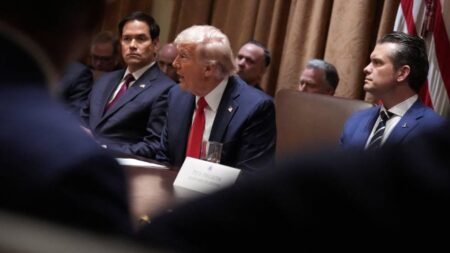
U.S. President Donald Trump said in his first cabinet meeting on Wednesday that he will not stop tariffs on products from Canada and Mexico, and added that not all of them will be imposed, but many will be.

The Republican president specified that the tariffs on his trade partners in the T-MEC will be applied on April 2.

“On April 2,” Trump replied to the question of when the customs tariffs will be applied after he gave Canada and Mexico a month’s deadline in early February to find an agreement.

“I’m not going to stop tariffs, no. Millions of people have died from fentanyl coming across the border,” he added during his first cabinet meeting.

Earlier this month, the Trump administration had set March 4 as the effective date for the 25% tariffs on goods from Mexico and non-energy goods from Canada.

Trump’s statement was made in the framework of his first meeting of the Executive, hours before Mexico’s security cabinet meets on Thursday in Washington with the head of US diplomacy, Marco Rubio. The meeting is precisely to try to avoid the tariffs that, in the absence of an agreement, should theoretically come into force next Tuesday.

The Republican acknowledged Wednesday that the number of illegal migrant crossings across the border with Mexico fell drastically but attributed it to his policies.

The data “have been good, but that is also due to us. In large part, to us. Right now it’s very difficult to get across the border,” Trump said.

The fentanyl “is mainly coming from China,” already subject to tariffs, “but it’s coming through Mexico and Canada,” Trump said.

Progress against drug trafficking and migration would be postponed again: Lutnick

The U.S. Secretary of Commerce, Howard Lutnick, assured that the Trump Administration could again postpone the 25% tariffs that the President announced for Canada and Mexico if both neighbors demonstrate progress in the fight against fentanyl trafficking and border security.
Lutnick noted during a U.S. cabinet meeting that Mexico and Canada could avoid imposing tariffs for another season “if they can demonstrate to the president that they’ve done an excellent job,” to which Trump apostilled that it will be difficult to satisfy.

Indeed, although Secretary Lutnick hinted at a possible further delay in the imposition of tariffs, Trump stressed that he is not backing down on the measure, and that he remains committed to imposing these measures, justifying them as a response to fentanyl deaths.

25% tariffs on the European Union on “Fools Day”.

On the other hand, Trump assured that his government will also impose a 25% tariff on the European Union “in general terms” and that it will affect “cars and the rest of things”. “We will announce it very soon,” he said, who already advanced these measures in the middle of the month.

On the EU bloc, Trump has denounced that the European Union was created “to screw the United States.” “That is its purpose,” he stressed.

Questioned about the date on which the new economic measures on Mexico, Canada and the European Union would take effect, Trump pointed to April 2, although he said he would like it to be a day earlier but that he is “a little superstitious.” In Anglo-Saxon culture, April 1 is celebrated as April Fools’ Day.

Source: El Economista

Read more
05Feb

“Plan Mexico” Seeks to Place Mexico at the Top of the World’s Economies

febrero 5, 2025 Nuria Minondo NEWS

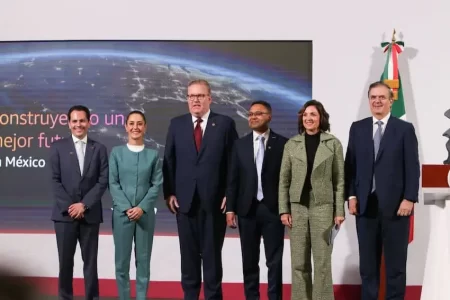
The President of Mexico, Claudia Sheinbaum, presented “Plan Mexico”, a comprehensive strategy that seeks to consolidate the country as a regional leader in economic development, social equity, among other issues, and to place the country among the top 10 economies in the world at the end of her six-year term.

The Mexican President revealed that the plan contemplates a portfolio of US$277 billion in domestic and foreign investments, distributed in 2,000 specific projects. These cover key sectors such as textiles, automotive, pharmaceuticals, aerospace, agribusiness and electromobility.

“The objective is for each state of the Republic to have a clear project, with defined goals that promote regional development and the generation of well-paid jobs,” she emphasized.

Among the most important goals are to make Mexico the tenth largest economy in the world by 2030, increase public and private investment to 27% of GDP, and reduce the time it takes to approve investment projects from 2.6 years to just one year.

In terms of social welfare, the president pledged to reduce poverty and inequality in the country by increasing the minimum wage, creating 1.5 million additional jobs and promoting educational programs that link secondary and higher education with strategic sectors.

The President announced a calendar of actions for 2025 that includes the publication of incentives for the relocation of companies, the launching of a fund for small and medium-sized companies, and the construction of 10 new industrial parks. She also announced a reform to simplify investment procedures and a national digitalization strategy.

Source: Mexico Now 

Read more
05Feb

Mexico’s Bajio and Northern Region Seeks to Boost the Chip Industry

febrero 5, 2025 Nuria Minondo NEWS

The semiconductor industry is one of the key sectors for the government of President Claudia Sheinbaum. According to Plan Mexico, the goal for 2030 is to double local supply in chip manufacturing, as well as to reach US$10 billion in investment, and the north of the country is a key area to reach these goals.

Initially, Plan Mexico considers the northern border area and the northwest of the country as two of the main industrial parks with the greatest impact on the sector, and this decision is no coincidence, as this is one of the most developed regions in terms of chip infrastructure.

Although the document emphasizes that the polygons are not limiting and more areas could be considered, the reality is that the north of the country already has the presence of multiple companies focused on the segment of discrete semiconductors and electronic integrated circuits, known collectively as SC-Core.

In this sense, the north and the Bajío are two of the most promising areas in Mexico in the SC-Core segment, according to the United States-Mexico Foundation for Science (Fumec) and the U.S. Agency for International Development.

According to the studies of these institutions, most of the investment is concentrated in Baja California, the main electronics manufacturing center in the country, followed by Jalisco, Chihuahua, Nuevo Leon, Sonora, Coahuila and Tamaulipas.

Within these states are distributed all the processes of the semiconductor supply chain available in the country, i.e., they have networks of clean rooms, design, manufacturing, assembly, packaging and testing, in addition to academia focused on the sector and research and development.

According to figures from the document Nearshoring of semiconductors in Mexico, based on the National Statistical Directory of Economic Units, there are 326 facilities related to the semiconductor segment in the border area.

Some of the most important companies located in this area include Foxconn and Qualcomm in Baja California; Amphenol, in Sonora; Foxconn, in Chihuahua; Celestica, in Coahuila; Lenovo, in Nuevo Leon; and LG, in Tamaulipas.

“The proximity of the Northern Border to the United States offers a geographic advantage that can be leveraged to participate in the semiconductor supply chain. This advantage facilitates the movement of people quickly and affordably, which serves as a basis for binational collaboration,” the document explains.

An example of this collaboration has been shown between Arizona State University, along with Sonora and Nuevo Leon, entities that have developed specialized chip programs to prepare young people in this industry.

Source: Mexico Now

Read more
16Ene

Amazon to Invest US $5B in Querétaro Data ‘Region’

enero 16, 2025 Nuria Minondo NEWS

President Claudia Sheinbaum announced a US $5 billion investment in Mexico from Amazon Web Services during her daily press conference on Tuesday.

The investment, which will be distributed over the next 15 years, is aimed at developing a new digital “region” in Mexico’s Querétaro state. With it, Amazon expects to establish Mexico as a hub for digital innovation in Latin America.

Amazon Web Services (AWS) plans to train 400,000 people to manage the Querétaro infrastructure cloud region. This builds upon AWS’s commitment to developing Mexican talent, having trained 500,000 Mexicans in cloud skills since 2017.

“[The] new Amazon investment of $5 billion in Querétaro. 200,000 people will be trained and educated, it will generate an additional $10 billion for the GDP, and we will be ready for artificial intelligence. Plan México is moving ahead!” Mexico’s Economy Minister Marcelo Ebrard wrote on the social media site X.

Plan México, announced by Sheinbaum and members of the Economy Ministry (SE) on Monday, seeks to attract $277 billion in domestic and foreign investment across 2,000 projects in the next six years.

AWS said the new digital region will help customers run workloads and securely store data via Mexico’s data centers. The company first announced plans to develop data centers in Mexico last February in response to the growing demand in Latin America for cloud services.

“Our commitment is to democratizing access to advanced technologies such as artificial intelligence and cloud computing, promoting a more equitable, innovative and competitive Mexico at a global level,” AWS Vice President for Latin America Paula Bellizia said during Sheinbaum’s press conference.  Bellizia also said that the investment is expected to support the creation of “7,000 highly qualified and full-time jobs” per year.

According to Amazon, the construction and operation of the new center in Querétaro will add about $10 billion to Mexico’s gross domestic product.

“One way to accelerate the impact on the Mexican economy is the adoption of artificial intelligence and we know that it is central to the government of President Claudia Sheinbaum,” said Bellizia on Tuesday.

With reports from El Economista, La Jornada and The Wall Street Journal

Source: Mexico News Daily
Read more
13Ene

European Countries Bet on Mexico

enero 13, 2025 Nuria Minondo NEWS

The Netherlands, Belgium and Germany are reinforcing their interest in Mexico, reflected in a growth of foreign direct investment (FDI) in the country.

Among these, the Netherlands leads the increase with an investment of US$1.9 billion through the third quarter of 2024, which represents a 238% growth compared to the same period of 2023, according to data from the Ministry of Economy.

Belgium also increased its participation, reporting an investment of US$1.5 billion, an increase of 101%. For its part, Germany registered an FDI of US$3.8 billion, marking an increase of 34.2%.

The National Council of the Maquiladora and Manufacturing Export Industry (Index) notes that Europe is also focusing its sights on Mexico in terms of how to set up companies and how they can join the value chains, becoming suppliers to be incorporated into production lines and then export to the United States.

But Index points out that it is not a matter of triangulation, as is thought of Chinese companies, because there has to be a change in tariffs and a transformation in the product.

The data indicate that in all cases they are concentrated in the manufacturing sector, in the case of the Netherlands and Germany they are directed to the automotive sector.

From January to September 2024, the Netherlands registers an FDI of US$1.4 billion for the manufacture of transportation equipment, being the most representative; in second place, with a more conservative value, is the beverage industry, with US$204 million.

Germany focuses its investment in the manufacture of cars and trucks, with US$1.4 billion, and in auto parts, with US$1 billion.

Belgium’s record, for said period, only shows that it is for manufacturing industries; however, in the information of the commercial relationship of the Ministry of Foreign Affairs, an investment in beverages and tobacco is identified.

Regarding the type of investment, from January to September 2024, intercompany accounts, which are transactions originated by debts between companies established in Mexico and other related companies residing abroad, represent 71% of the total; reinvestments, with 28.3%; and new investments, with only 0.3%.

Source: Mexico Now

Read more
13Ene

INA Forecasts Production of 127,500 MDD for Auto Parts by 2025

enero 13, 2025 Nuria Minondo NEWS

INA projects that Mexico will produce 127,500 MDD in auto parts by 2025, a growth of 2.42% over 2024. In 2024, FDI would reach 2,550 MDD, with electrical harnesses as the main component.

Mexico City, January 9, 2025. – At a press conference, the General Director of the National Auto Parts Industry (INA), Gabriel Padilla Maya, presented the sector’s growth projections for 2025, highlighting that the industry will continue its positive trajectory supported by its production capacity, a robust export environment and a favorable trade balance, due to factors such as the implementation of the Mexico-US-Canada Agreement (T-MEC), nearshoring, growing foreign direct investment and expansions of plants already installed in our country due to the growth in demand within the North American region.

In addition, Padilla Maya mentioned that it is estimated that by the end of 2024, total auto parts production in Mexico will reach $124,484 million dollars, which would represent an annual growth of 3.52% compared to the end of 2023. Similarly, based on current dynamics and demand expectations in the North American region, INA projected that auto parts production in Mexico by the end of 2025 will reach US$127.5 billion, which would represent a growth of 2.42% with respect to 2024.

However, he also highlighted the challenges posed by the trade scenario in 2025, with declarations on tariff policies that could increase export costs to the United States. Despite these challenges, the sector continues to consolidate itself as a leader in the global supply chain, demonstrating a diversification and expansion of the industry in regions of Yucatan, Zacatecas and Guanajuato.

Regarding the trade balance, the association highlighted that Mexican auto parts exports reached $90.9 billion dollars in the January-October 2024 period, with the United States being the main destination with 88% of total exports. At the same time, he explained that the sector’s imports also follow a growing trend, with the United States representing 52.3% of total auto parts imports, reflecting a positive trade balance of $32.472 billion dollars.

The Director General of INA highlighted the key factors driving the growth of the sector in Mexico: the T-MEC and its Regional Content Value requirement, which promotes the integration of the production chain in North America; 87% of the auto parts produced in Mexico are destined for export, with the United States as the main trading partner; the nearshoring phenomenon, which has attracted new investments and generated greater demand for auto parts; and the expansion of plants in Mexico due to the growth of demand in the North American region. These elements consolidate Mexico as the main auto parts supplier for the North American region in the coming years.

In terms of investment, Padilla Maya indicated that FDI in the sector reached $2.302 billion dollars during the accumulated January-September 2024, reflecting a growth of 18.07% compared to the same period of the previous year and, by the end of 2024, he estimates that FDI will reach $2.550 billion dollars, which would imply a growth of 25.46% with respect to 2023. He also highlighted that the investment outlook for 2025 is equally positive, with a growth forecast of 5.88%, reaching $2.7 billion dollars.

Finally, Gabriel Padilla said that, among the main auto parts components manufactured in Mexico, electrical harnesses continue to have the largest share, representing 19.50% of total production. They are followed by transmissions and clutches (10%), fabrics, carpets and seats (9.04%), engine parts (7.86%) and suspensions and steering (6.68%). Together, these products make up more than 50% of domestic manufacturing.

Source: Cluster Industrial 

Read more
05Dic

FUCHS to invest US$14.7 million in San Luis Potosi

diciembre 5, 2024 Nuria Minondo NEWS

The German company FUCHS announced an investment of millions of dollars for its installation in San Luis Potosí, for the next few years.

This was announced by Jesus Salvador Gonzalez Martinez, head of the Secretariat of Economic Development (SEDECO) in the state. This operation was agreed after a meeting with executives of the German company in San Luis Potosí. The German automotive supplier FUCHS will invest a total of US$14.7 million.

After the announcement, state authorities emphasized that the investment is the result of the continuous work of the State Government through SEDECO.

The German company FUCHS, world leader in lubricants, will be located on a 51,731.75 square meter site in the WTC 2 Industrial Park, located in Villa de Reyes. It will begin operations in January 2026.

It will also have advanced logistics infrastructure, including a railroad spur. This structure will enable efficient distribution of products to local and regional markets, significantly improving the company’s connectivity.

Source:Mexico Now

Read more
07Nov

MG Motor to invest US$1.05 billion in Mexico

noviembre 7, 2024 Nuria Minondo NEWS

The Chinese-British automaker MG Motor has announced a significant investment of US$1.05 billion to establish a manufacturing plant in Mexico, as part of its new phase of growth in Latin America.

This phase, called “MG 2.0,” will position the Mexican market as the core of the brand’s expansion in the region, according to Zhang Wei, president of MG Motor Mexico, during an event commemorating the company’s fourth anniversary in the country.

The manufacturing plant will have a production capacity of 100,000 units per year and will be built with an investment of US$450 million in infrastructure and US$500 million in equipment.

Although MG Motor has not yet disclosed a construction start date or its exact location, the facility is shaping up to be a cornerstone of the brand’s supply strategy, not only for Mexico, but also for other Latin American markets.

“Mexico is not only consolidating its position as the second most important market worldwide for the SAIC Group, but is also becoming the driving force behind a new era of growth and development throughout Latin America,” said MG Motor Mexico’s CEO.

With the goal of expanding its coverage to 34 countries in the region by 2025, MG Motor envisions Mexico becoming a key production center.

Nava emphasized that the strategic plan includes assembling popular models in the region, such as SUVs and sedans, to meet the growing demand of the Latin American market.

Source: Mexico Now

Read more
02Oct

Coahuila and Guanajuato, the states with the largest transportation equipment exports

octubre 2, 2024 Nuria Minondo NEWS

According to the National Institute of Statistics and Geography (Inegi), during the second quarter of 2024, the value of exports by state reached 139.354 billion dollars.

The states with the highest contribution to the total value of exports were:

1. Chihuahua: 13.1% 2.
2. Coahuila: 12.7% 3.
3. Baja California: 10.3% 4.
4. Nuevo Leon: 9.9% 5.
5. Tamaulipas: 6.6% 6.
6. Guanajuato: 6.4%.

During this period, manufacturing exports accounted for 90.8 percent of the total value of exports from the states. This was followed by mining (oil and non-oil), with 5.8 percent, and the agricultural sector, with 3.5 percent. At an annual rate, the value of exports from the states increased by 3.1 percent.

By economic sector, manufacturing exports increased by 4.4 percent and agricultural exports by 0.9 percent. Mining exports decreased 13.0 percent.

In the second quarter of 2024, exports of transportation equipment manufacturing stood out with 40.3 percent of the total value of total exports; of computer, communication, measuring and other electronic equipment, components and accessories,14.9 percent; and of accessories, electrical appliances and electric power generation equipment, with 6.2 percent.

The states that stood out in transportation equipment exports were Coahuila (21.2%), Guanajuato (11.3%), Chihuahua (8.7%), Nuevo León (8.1%) and Puebla and San Luis Potosí (7.3% each), accounting for 63.8% of the total value of these exports.

Source: Mexico Industry 

Read more
  • 12345…40
in

Privacy Policy and Terms of Use