Call us: +52 444-825-0550
Mexcentrix – Shelter Services Mexico Outsourcing Mexcentrix – Shelter Services Mexico Outsourcing
  • Home
  • About
  • Services
    • All of our Services
    • Site Selection
    • Startup & Shelter
    • Human Resources
    • Foreign Trade
    • Tax & Accounting
    • Legal
  • Cases
  • Contact
    • Contact Us
    • Careers
  • Resources
    • Blog & News
    • Newsletter
    • FAQ
Mexcentrix – Shelter Services Mexico Outsourcing

Nuria Minondo

28May

LINDE + WIEMANN Begins Operations in San Luis Potosí

mayo 28, 2026 Nuria Minondo NEWS

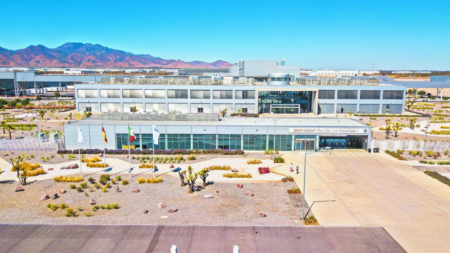
The new plant is part of the industrial ecosystem linked to large-scale investments in the region. Mexico’s automotive supply chain is expanding its capabilities with the start of operations at LINDE + WIEMANN’s plant in San Luis Potosí, focused on producing highly complex structural components for electric vehicles, including programs related to the BMW iX3 and the Neue Klasse architecture, whose production launch is scheduled for 2027.

Since becoming operational, the facility has been manufacturing components that will be part of the strategic supply chain for new electric vehicle models, integrated into processes designed to meet the technical requirements of next-generation platforms, particularly in terms of structural safety and material efficiency.

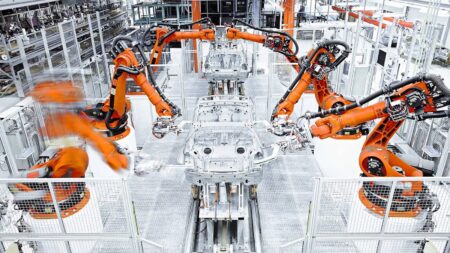
The complex features an automated assembly line and begins operations with an initial workforce of 100 employees. It is also projected to generate annual revenue of €20 million, positioning itself as a key hub within the company’s industrial strategy in North America.

Located in the industrial zone of San Luis Potosí’s capital city, the plant joins LINDE + WIEMANN’s global manufacturing network, which now totals 16 facilities with this opening. Through this project, the company aims to strengthen the regional supply chain and respond to the growing demand for specialized components for next-generation vehicles.

Although the company has not disclosed the investment amount allocated to this facility, its development takes place within a broader context of industrial expansion in the region. In particular, BMW’s approximately €800 million investment to transform its San Luis Potosí plant—where the BMW iX3 will be produced—stands out.

Industrial Innovation

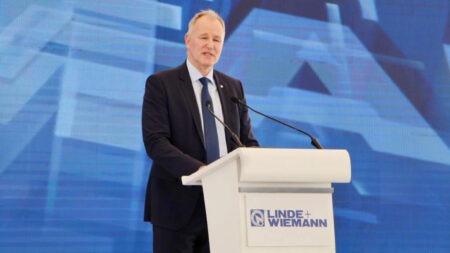
During the inaugural ceremony, the German Consul in San Luis Potosí highlighted the importance of projects like this in driving industrial innovation and strengthening economic cooperation between Mexico and Germany.

As part of the event, a ribbon-cutting ceremony and tour of the facilities were held, showcasing next-generation roll-forming and joining technologies aligned with the advanced manufacturing demands of the automotive sector.

Source: Somos Industria

Read more
15May

Amendment to the Federal Labor Law: Reduction of Working Hours

mayo 15, 2026 Nuria Minondo newsletter

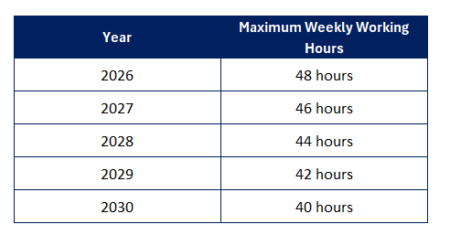
On May 1, 2026, an amendment to the Federal Labor Law was published in the Official Gazette of the Federation, establishing the gradual reduction of the standard workweek from 48 to 40 hours without affecting employees’ salaries or benefits.

Main Changes

  • The workweek will be gradually reduced until reaching 40 hours per week by 2030.
  • The maximum weekly working hours will decrease progressively beginning in 2027.
  • Working hours may be distributed by mutual agreement between employer and employee.
  • New limits and payment rules for overtime work are established.
  • Employers must implement an electronic working-hours registration system.
  • Failure to comply with these obligations may result in penalties and fines.


Effective Date

The reform entered into force on May 2, 2026, one day after its publication in the Official Gazette of the Federation.

The reduction of the workweek will be implemented gradually from 2027 through 2030, allowing companies time to adjust their operational and administrative structures.

The period from May to December 2026 will serve as a transition and adjustment phase for employers.

The provisions regarding electronic attendance and working hours records will become effective on January 1, 2027.

Workweek Reduction Schedule

Overtime Hours (Article 66)

Overtime work will be subject to progressive limits as the workweek reduction advances. During 2026 and 2027, overtime may not exceed 9 hours per week; in 2028 the limit will be 10 hours; in 2029 it may reach up to 11 hours; and beginning in 2030 the maximum permitted overtime will be 12 hours per week.

These hours may be distributed in shifts of up to 4 hours per day, for a maximum of 4 days per week. Overtime must be paid at 100% above the employee’s regular hourly wage.

Excess Overtime (Article 68)

Any overtime exceeding the legal limits must be compensated at 200% above the ordinary hourly wage.

Under no circumstances may the combined ordinary and overtime work exceed 12 hours per day.

Electronic Workday Record (Article 132, Section XXXIV)

Employers will be required to maintain an electronic record of attendance and working hours for each employee. This record may serve as evidence in labor disputes.

Failure to comply with this obligation may result in fines ranging from 250 to 5,000 UMA units.

Companies are encouraged to review work schedules, shifts, staffing structures, and operational models in preparation for these changes. Employers should also update internal policies, employment agreements, and attendance control systems to ensure compliance with the new labor requirements.

For guidance on how these reforms may impact your organization and how to ensure compliance, Mexcentrix can help. Contact us to learn how we can support your company during this transition.

Read more
20Abr

Extension for Compliance with the Electronic Value Manifest

abril 20, 2026 Nuria Minondo newsletter

On March 30, 2026, the Mexican Tax Administration Service (SAT) published the First Resolution of Amendments to the General Foreign Trade Rules for 2026, introducing a key update: an extension for compliance with the Electronic Value Manifest (MVE).

What is the MVE?

The Electronic Value Manifest (MVE) is a declaration used to support the customs value of imported goods, submitted electronically through the Ventanilla Única de Comercio Exterior (VUCEM). It ensures transparency and consistency in import valuation.

Key Update

  • New mandatory compliance date: June 1, 2026
  • Until then, companies have a transition period to adapt processes and systems

Why It Matters

The MVE strengthens:

  • Control over customs valuation
  • Data traceability and consistency
  • Oversight by tax authorities

After the deadline, errors or non-compliance may lead to audits, delays, or penalties.

What Should Companies Do?

  • Review and align valuation processes
  • Ensure proper supporting documentation
  • Prepare systems for MVE submission via VUCEM
  • Coordinate with customs and compliance teams

The extension provides time to prepare, but companies should act early to avoid risks once the MVE becomes fully enforceable.

At Mexcentrix, we help you ensure compliance, optimize processes, and reduce risk in foreign trade operations

Read more
23Mar

What Manufacturers Should Consider Before Investing in Mexico in 2026

marzo 23, 2026 Nuria Minondo Blog

Mexico continues to stand out as a strategic location for manufacturing investment in 2026. Its geographic proximity to the U.S., established supply chains, and deep integration under the United State, Mexico, Canada Agreement (USMCA) make it attractive for companies seeking nearshoring opportunities. However, foreign investors need to understand the evolving economic, labor, and trade landscape in Mexico to make an informed decision.


1.Minimum Wage Increases and Labor Costs

Manufacturing companies in Mexico benefit from the low labor costs in the country. Its is important to consider the yearly increases in wages in Mexico. For example,  a 13% raise for the general minimum wage was approved and  took effect on January 1, 2026, bringing it to approximately MXN $315.04 per day (roughly MXN $9,582 monthly);  except for the Border Free Zone area (Zona Libre de la Frontera Norte), in which the minimum wage rose only 5% to around MXN $440.87 per day due to already higher baseline levels.

For manufacturers, this increase presents both opportunities and challenges:

  • Opportunity to strengthen employee satisfaction and retention, which can improve productivity.
  • Challenge to adjust wage structures and labor budgets, especially for labor-intensive operations.

While Mexico still offers competitive labor costs compared with many developed economies, manufacturers should recalculate total labor expenses and integrate the wage increase into their cost models. This includes evaluating compensation packages, workforce planning, and potential automation strategies to balance rising labor costs with operational efficiency.


Furthermore, regarding Mexico’s labor market, there is strong technical workforce with manufacturing experience in Mexico, and high availability of skilled operators compared to other countries such as USA or Canada.


2.Exchange Rate Volatility and Its Impact on Costs

The Mexican peso (MXN) is expected to remain somewhat volatile against the U.S. dollar (USD) in 2026, which could significantly affect investment returns and cost planning.

By beginning of the year, the peso has strengthened against the U.S. dollar, although the trend has been moderate and somewhat volatile,

What this means for manufacturers:

  • Input costs denominated in USD (such as international equipment, machinery, or specialized components) could become more expensive if the peso weakens.
  • Profit margins on exports into the U.S. and Canada might fluctuate depending on exchange rate movements.
  • Hedging strategies may become an essential financial tool to reduce FX risk.

Working with finance teams to model different exchange rate scenarios, considering both short-term swings and longer-term trends, purchasing forward contracts, managing dollar exposure, and optimizing pricing structures can help stabilize costs.


3. The 2026 USMCA Review: Risks and Opportunities

If your company is evaluating manufacturing in Mexico, United States–Mexico–Canada Agreement is one of the most important variables—it can determine whether your operation is highly competitive or structurally disadvantaged.

Furthermore, a major element shaping investment in Mexico in 2026 is the first mandated six-year review of the USMCA (United States, Mexico, and Canada Agreement), set for July 1, 2026. Under the treaty’s rules, this review could lead to revisions in rules of origin, labor provisions, digital trade, and other regulatory frameworks that affect manufacturing and cross-border commerce.

Strategic Implications for Manufacturers:

  • Regulatory compliance uncertainty: While existing USMCA provisions remain in force until any changes are agreed upon, companies should brace for the potential adjustment of trade rules that could impact competitive advantages like tariff-free access and supply chain integration.
  • Opportunity to lead in nearshoring: The review isn’t just a risk; it’s a strategic opportunity for Mexico to strengthen its position as a nearshoring hub, further integrating manufacturing networks across North America.
  • Tariff sensitivity and rules of origin: Some proposed changes could tighten regional content requirements (especially for vehicles and auto parts). Manufacturers must assess supply chains now to ensure parts and inputs qualify under potential new requirements.

In short, while the USMCA review could elevate uncertainty in the near term, it also provides a clear incentive for regional supply chain investments and reinforces Mexico’s role in North American manufacturing.


4. Broader Market and Growth Context

Data from economic forecasts suggests that Mexico’s overall economic growth in 2026 may be modest, partly due to lingering trade uncertainty, but not inactive. Some analysts project a slight rebound from slow growth in 2025, with manufacturing demand and nearshoring interest helping to stabilize investment conditions.

For manufacturers, this means carefully timing market entry and scaling plans based on local demand and broader macroeconomic trends.

Key Takeaways for Manufacturers Considering Investment in Mexico (2026)

  • Plan for higher labor costs: Adjust forecasts and compensation strategies to incorporate the new minimum wage levels.
  • Manage exchange rate risk: Use financial hedging and scenario planning to mitigate peso-USD volatility.
  • Anticipate USMCA implications: Stay informed on the 2026 USMCA review its outcomes may affect tariff benefits, compliance standards, and supply chain strategies.
  • Leverage nearshoring advantages: Mexico’s proximity to the U.S. and entrenched production networks still offer compelling reasons to invest.


As Mexico continues to position itself as a strategic manufacturing hub for North America in 2026, companies must navigate key challenges such as rising labor costs, exchange rate volatility, and the upcoming USMCA review. While these factors introduce complexity, they also create significant opportunities for manufacturers that plan strategically and stay informed.

Having the right local partner can make all the difference. If your company is considering investing, expanding, or relocating operations to Mexico, a trusted shelter services provider such as Mexcentrix, can help you reduce risks and liabilities, while ensuring compliance, and accelerating market entry.

At Mexcentrix, we support international manufacturers with comprehensive shelter services, including legal and fiscal compliance, HR and payroll administration, site selection, operational support, and ongoing regulatory guidance so you can focus on growing your business while we handle the local complexities.

If you are ready to explore manufacturing opportunities in Mexico, contact Mexcentrix today and let us help you build a strong and compliant operation.


Read more
21Ene

General Motors to Invest US$1 Billion in Mexico

enero 21, 2026 Nuria Minondo NEWS

General Motors (GM) plans to invest US$1 billion in Mexico between 2026 and 2027 to strengthen its manufacturing operations and support long-term growth in the country. The announcement comes at a time of heightened political debate in the United States over trade and industrial policy, yet the company’s decision underscores Mexico’s continued importance within GM’s North American strategy.

Company executives said the investment is part of a broader shift aimed at expanding production capacity, improving operational efficiency, and adapting facilities to meet changing market demand. GM is also seeking to enhance flexibility at its plants so they can manufacture different vehicle platforms and technologies as the automotive industry continues its transition.

While specific projects and locations have not yet been disclosed, the automaker indicated that details on plant upgrades and production plans will be shared in the coming months. In previous years, GM has invested heavily in Mexico to modernize equipment, optimize supply chains, and integrate advanced manufacturing processes.

Mexico remains a central hub for GM’s vehicle and engine production, supplying both the domestic market and exports across North America. The company operates multiple facilities in the country and employs thousands of workers across manufacturing and engineering operations.

The new investment suggests that, despite uncertainty surrounding future trade rules and political rhetoric, global automakers continue to view Mexico as a competitive and reliable manufacturing platform due to its skilled workforce, established supplier networks, and strategic access to regional markets.

With this commitment, GM aims to reinforce its long-term presence in Mexico and position its operations to respond more effectively to shifts in consumer demand and technological change in the coming years.

Source: Mexico Now

Read more
18Nov

SHPAC invests $40 million in new plant in León, Guanajuato

noviembre 18, 2025 Nuria Minondo NEWS

With an investment of US$40 million, Korean company SHPAC laid the foundation stone for its new plant in León, Guanajuato, a project that will generate 120 direct jobs and strengthen the state’s industrial vocation. This business decision confirms Guanajuato’s attractiveness for the establishment of high-value manufacturing operations.

The arrival of SHPAC, a Korean company, was attended by state authorities representing Governor Libia Dennise. During the event, the company’s confidence in Guanajuato’s economic environment and in the productive capacity of León, a city with a long history in manufacturing and industry-related services, was highlighted.

SHPAC boosts the metalworking industry in León

SHPAC’s new plant will strengthen the metalworking industry by producing specialized components for infrastructure and construction projects. The company will add local and regional suppliers, which will expand the value chain and open up opportunities for small and medium-sized enterprises participating in the Bajío industrial sector.

In addition, the $40 million project facilitates greater integration between the metalworking industry and the construction sector, both of which play a strategic role in Guanajuato’s economic dynamics. The installation of this plant reinforces the state’s position as a competitive destination for productive investment in Mexico and strengthens its presence in international markets.

More jobs and competitiveness for Guanajuato

With the creation of 120 direct jobs, SHPAC will provide specialized employment opportunities for talent in León and nearby municipalities. The company plans to offer technical training programs in metalworking processes, which will translate into greater productivity, better job profiles, and a more competitive environment for regional industry.

The investment by this Korean company strengthens Guanajuato’s industrial diversification and accompanies new projects related to construction and infrastructure. With business decisions of this nature, the state consolidates its global competitiveness and increases its attractiveness compared to other regions competing for capital, specialized employment, and the development of long-term supply chains.

Source: Mexico Industry

Read more
11Nov

Fifth Resolution on Amendments to the General Foreign Trade Rules for 2025 and Annexes 1, 2, and 5

noviembre 11, 2025 Nuria Minondo newsletter

On October 21, 2025, the Tax Administration Service (SAT) published in the Official Gazette of the Federation the Fifth Resolution of Amendments to the General Foreign Trade Rules (RGCE) for 2025, along with Annexes 1, 2, and 5. These amendments entered into force the day after their publication, except for certain changes related to ATA Carnets, which will take effect on November 1, 2025.

Amendments

Below is a list of only some of the amendments; we recommend reviewing the full publication to identify other topics not addressed in this bulletin.

  1. Regulation of the Hydrocarbons and Fuels Sector
    New provisions are established for the control and oversight of operations related to hydrocarbons and fuels.

  2. Operation of ATA Carnets
    Modifications are made to the rules governing the operation of ATA Carnets, facilitating their use for the temporary importation of goods in international events.

  3. New Rules on Registries and Amendment of Customs Declarations

  • Grounds for suspension in registries (Rule 1.3.3)
    Subsections XXXII and XL provide for the suspension of importers, specific sectors, or exporters when weapons, narcotics, or prohibited goods are introduced or removed without demonstrating compliance with applicable regulations or restrictions.
  • Amendment of customs declarations (Rule 6.1.1)
    Taxpayers are now allowed to amend the information on a customs declaration as many times as necessary, provided it is done before the automated selection mechanism is activated. After activation, only minor administrative errors may be corrected.

Amended Annexes

Annex 1: New formats and foreign trade templates updated according to the changes in the general rules.
Annex 2: Modification of foreign trade procedures, including new processes and requirements for various customs procedures.
Annex 5: Adjustments to the provisions related to the operation of ATA Carnets, aligned with the modifications to the general rules.

Recommendations for Foreign Trade Operators

  • Review the amendments to the RGCE and their annexes in detail to ensure compliance with the new provisions.
  • Update internal procedures and management systems to incorporate the changes in customs processes and requirements.
  • Train personnel involved in foreign trade operations on the new regulations and procedures.

The recent amendments to the 2025 General Foreign Trade Rules reflect the authorities’ commitment to strengthening security, simplifying procedures, and promoting transparency in international operations. It is essential for companies to review these updates and adapt their internal processes to ensure timely compliance. Proactive management will allow businesses to take advantage of a clearer and more efficient regulatory framework, contributing to the growth and competitiveness of Mexican foreign trade.

For full details, consult the official DOF publication.

Read more
29Oct

VAT in Mexico: How Refunds Work

octubre 29, 2025 Nuria Minondo Blog

For businesses operating in Mexico, understanding one of the main federal taxes, which is Value Added Tax (VAT) is essential. While VAT is a standard consumption tax applied to most goods and services, certain entities may be eligible to claim refunds. This guide explains how VAT refunds work, who can apply, and provides practical tips for a smooth process.


What Is VAT (IVA) in Mexico?

In Mexico, the VAT rate is  16% for most goods and services, with a reduced rate of 8% in certain border regions. Businesses registered for VAT are required to charge the tax on their sales but can also deduct the VAT paid on purchases known as IVA acreditable.

When a company’s input VAT (paid on purchases) exceeds its output VAT (charged on sales), the excess may be refunded or carried forward to offset future VAT obligations. This is particularly relevant for exporters, manufacturers, or companies making large investments.


Who Can Apply for a VAT Refund?

Basically, most companies with VAT in favor can apply for a VAT refund as long as they comply with specific obligations and requirements. The main actor who apply include:

  • Exporters

Companies exporting goods or services often pay VAT on inputs but don’t charge VAT on exports, since exports are zero-rated, therefore, this creates an excess VAT credit eligible for refund. It is important to take into account, exporters must maintain accurate records and proof of export transactions.

  • Manufacturers and Capital-Intensive Businesses

Businesses investing in equipment, machinery, or raw materials may accumulate excess input VAT. Proper accounting and documentation are key to ensuring these credits can be refunded.

  • Authorized Economic Operators (AEOs)

Companies certified as Authorized Economic Operators can  also benefit from streamlined VAT recovery procedures. These businesses must comply with Mexican tax and customs regulations and provide detailed documentation of transactions.


How to Apply for a VAT Refund

The VAT refund process is done through the  Servicio de Administración Tributaria (SAT) electronic portal. The main steps include:

  1. File Monthly VAT Returns: Submit your VAT declaration (Declaración de IVA) electronically on time.
  2. Submit a Refund Request: File a refund request, which can only be done after submitting the monthly VAT return that reflects the balance in favor.
  3. Provide Documentation: Include invoices (CFDIs), proof of VAT payments, export documents (if applicable), and bank details for deposit.
  4. Wait for SAT Review: SAT generally processes refund requests within 40 business days, though audits or requests for additional documentation can extend this.


Tips for a Smooth VAT Refund Process

Common Challenges

  • Documentation errors: Missing or mismatched invoices can lead to delays.
  • Non-compliance with deadlines: Late submissions may result in penalties or denial of refunds.
  • Regulatory complexity: Mexican VAT regulations can be intricate, particularly for exports and large investments.

By preparing in advance and following best practices, companies can successfully recover VAT credits and improve cash flow.

VAT refunds in Mexico offer a valuable opportunity for businesses to reclaim taxes on purchases, especially for exporters and capital-intensive companies. Proper record-keeping, timely filings, and careful compliance with SAT requirements are essential for a smooth and successful refund process.

If you need help with the VAT refund process, contact Mexcentrix. We can advise and guide you step by step to maximize your refunds and ensure tax compliance in Mexico.

Read more
17Oct

Japanese company Yokohama expands its facilities in Aguascalientes; will invest 464 million pesos

octubre 17, 2025 Nuria Minondo NEWS

During the second quarter of 2025, Aguascalientes was the state that received the largest amount of foreign investment from Japan.

With an investment of 464 million pesos, the governor of Aguascalientes, Tere Jiménez, spearheaded the launch of a new expansion project in the warehouse and production lines area of the Japanese company Yokohama Industries Americas de México, which manufactures automotive parts in the state.

“We are confident that this expansion by Yokohama is one of many Japanese investment projects that will continue to come to our state,” she said.

“Investment takes root where there is certainty, and that is why in Aguascalientes investments are attracted, cared for, and take root; we protect them with peace, security, legal certainty, a solid rule of law, and, above all, with the talent of our people,” the governor emphasized.

She noted that during the second quarter of 2025, Aguascalientes was the state that received the largest amount of foreign investment from Japan, which, from 1999 to June of this year, exceeds $8 billion with the establishment of 138 companies from Japan.

“The friendship between Japan and Aguascalientes continues to grow stronger,” he emphasized.

The Secretary of Economic Development, Science, and Technology (Sedecyt), Esaú Garza de Vega, highlighted that Aguascalientes is a visionary state that works hand in hand with the growth and economic development of companies.

“Ten years ago, I had the opportunity to participate in the inauguration of this plant, which was one of the first in this park, and today I am pleased to be part of the growth that Yokohama has experienced in the state. You can count on the support of the State Government to achieve your goals and continue growing together,” emphasized the head of Sedecyt.

Takayuki Hamaya, president of the Yokohama Rubber division, indicated that Mexico continues to be a stable and safe country for investment. He thanked the state government and the community of Aguascalientes for their support.

“We have seen how the number of employees has grown to produce what is necessary and meet the assembly needs of partner companies, such as Nissan; it is a commitment to our work. This new construction will allow us to achieve greater growth and expand our business,” he said.

Margarita Gallegos Soto, municipal president of San Francisco de los Romo, recognized the governor’s work on behalf of the business sector, as well as her efforts abroad to benefit the state.

“Here, the goal is clear: to continue working to take our land to the next level. We are a fertile municipality that, thanks to our privileged location, has become a hub for investment and an attraction for industry at the state, national, and international levels,” said Gallegos Soto.

Also present at the event, held at the San Francisco IV Industrial Park, were Yasuhiko Tajima, president of Yokohama Industries Americas; Brian Franklin, vice president of Administration and Business Development at Yokohama Industries Americas; Humberto Bernal, plant manager at Yokohama Industries Americas in Aguascalientes; Takero Aoyama, Consul General of Japan in León, Guanajuato; and Salvador Alcalá Durán, local deputy.

Source: El Financiero

Read more
24Sep

Mexico Proposes Tariff Increases

septiembre 24, 2025 Nuria Minondo newsletter

The Mexican government, has announced a proposal to raise import tariffs on products coming from countries with which Mexico has no free-trade agreements, particularly targeting goods from Asia; which measure is still pending congressional approval.

According to the mexican government, the initiative is part of the Protection Program for Mexico´s Strategic Industries, and aims to strengthen domestic industry, while reducing unfair competition from low-cost imports, framing it as part of a broader national strategy to boost industrial self-reliance.


SCOPE

  • Increase tariffs up to 50% on 1,463 HTS codes, which includes a wide range of products including automobiles, textiles, steel, paper, glass, cosmetics, and motorcycles.
  • Coverage of 19 strategic sectors.
  • Impact on USD 52 billion in imports (8.6% of total national imports).


AFFECTED INDUSTRIES AND SECTORS


IMPACT TO CHINESE IMPORTS

China is one of the main affected countries by this proposal, given that chinese imports account for approximately 20% of Mexico’s total imports, including: vehicles, auto parts, steel, and textiles, among others.

Chinese-made vehicles, which have rapidly gained market share in Mexico, and account for around a fifth of new car sales in the country,  would face some of the highest tariff hikes. In regards to auto parts, China exported approximately US$7.2 billion worth of auto components to Mexico in 2024, representing nearly 7% of China’s total auto parts export.

Therefore, tariff increases of up to 50% could therefore sharply reduce the competitiveness of Chinese imports in Mexico.


China urges Mexico to think twice before establishing tariffs, and stating they could respond with retaliating measures. 


IMPACT FOR MEXICO

Experts estimate that tariffs will cause price increases of up to 80 percent on appliances, furniture, textiles, footwear, and other products.


EFFECTIVE DATE

The initiative establishes that the decree will enter into force 30 days after its publication in the Official Gazette of the Federation (DOF), which has not been published yet and will remain valid until December 31, 2026.

Read more
    123…13
in

Privacy Policy and Terms of Use